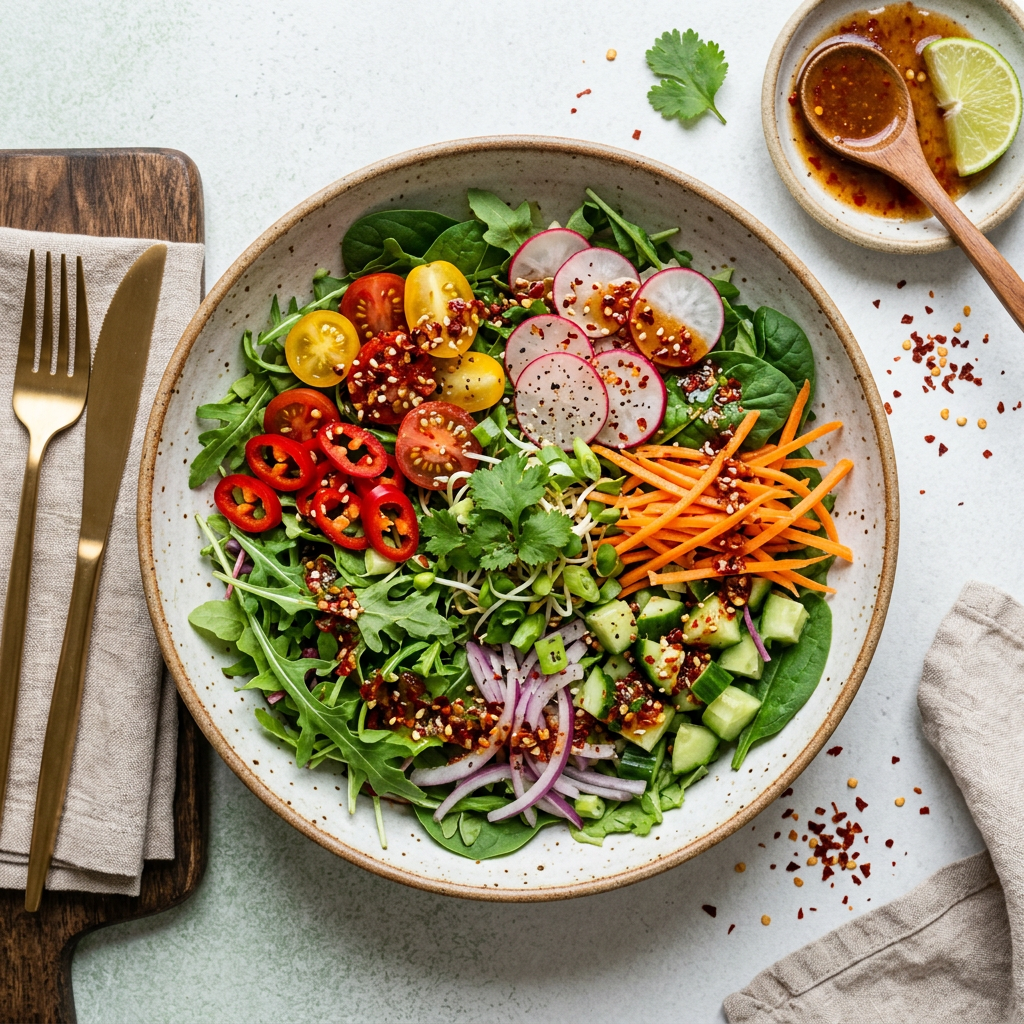
Product details
Serving size: 30 gComposition
Hung curd (in-house) 84%, Garlic 5%, Gingelly (sesame) oil, cold-pressed 3%, Dried red chillies 3%, Black pepper 2%, Lemon juice (fresh-squeezed) 2%, Pink salt 1%
Nutrition – Macros
PER 100 G: 130 kcal
Protein 8.5 g
Carbohydrate 8.5 g (sugars 4.7 g; net carbs 7.1 g)
Dietary fibre 1.5 g
Fat 7.5 g (saturated 3.3 g)
PER SERVE (30 g): 39 kcal
Protein 2.5 g
Carbs 2.6 g
Sugars 1.4 g
Fibre 0.4 g
Fat 2.2 g
Energy split: protein 26% · carbs 24% · fat 51%
No added sugar
Protein 8.5 g
Carbohydrate 8.5 g (sugars 4.7 g; net carbs 7.1 g)
Dietary fibre 1.5 g
Fat 7.5 g (saturated 3.3 g)
PER SERVE (30 g): 39 kcal
Protein 2.5 g
Carbs 2.6 g
Sugars 1.4 g
Fibre 0.4 g
Fat 2.2 g
Energy split: protein 26% · carbs 24% · fat 51%
No added sugar
Nutrition – Micros
PER 100 G (% of RDA*): Calcium 121 mg (12%)
Iron 0.5 mg (2%)
Magnesium 16.8 mg (5%)
Phosphorus 129 mg (13%)
Potassium 224 mg (6%)
Zinc 0.5 mg (4%)
Vitamin C 3.3 mg (5%)
Vitamin A 81.0 µg RAE (10%)
Vitamin E 1.1 mg (11%)
Folate 8.3 µg (4%)
Vitamin B12 0.6 µg (25%)
Sodium 412 mg
PER SERVE (30 g), nutrients ≥5% RDA: Vitamin B12 0.2 µg
Sodium 124 mg
Stand-out micronutrients (≥15% RDA per 100 g): Vitamin B12
Bioactives: live curd cultures; sesamol (sesame oil); allicin (garlic); capsaicin (chilli); piperine (pepper)
Goodness
A hung-curd (Greek-yoghurt-style) dressing: creamy, high in protein, and much lower in fat than mayo-based dressings. Hung curd adds calcium, B12 and live cultures if unheated. Garlic (allicin), black pepper and red chilli (capsaicin) add flavour plus antimicrobial and metabolism-supporting compounds. Cold-pressed gingelly oil supplies sesame lignans and helps absorb fat-soluble nutrients from the salad.
Label claims
Source of protein; Source of Vitamin B12; Low sugar; No added sugar; Naturally gluten-free (verify < 20 ppm)
Who should avoid
• Sesame allergy: contains sesame (gingelly) oil (cold-pressed sesame oil retains allergenic protein).
• Cow's-milk protein allergy (CMPA): contains hung curd.
• Vegans: contains hung curd.
• Strict Jain diet: contains root vegetables (garlic).
• Satvik / no-onion-no-garlic diets (incl. many vrat/fasting customs): contains garlic.
• Infants under 12 months: salted product; infant kidneys cannot handle added salt.
• Active peptic ulcer, erosive gastritis, or a severe acid-reflux flare: strong spice/acid load irritates the stomach lining.
Consume less / with caution
• High blood pressure / sodium-restricted diets: moderate sodium (412 mg/100 g; ~124 mg per serve).
• Mild acid reflux / sensitive stomach (outside flares): take after food, not on an empty stomach (chilli, black pepper and raw garlic).
• IBS / bloating-prone people: garlic (fructans) and milk/curd (lactose) may trigger gas or loose stools; start with half a serve.
• Lactose intolerance: fermentation lowers lactose and most people tolerate kefir/curd well, but test a small serving first.
• On blood thinners (warfarin, aspirin, clopidogrel) or within 2 weeks of surgery: raw garlic have mild anti-platelet effects; keep to one serve.
• On narrow-margin medicines (phenytoin, theophylline, cyclosporine, some heart drugs): piperine in black pepper alters drug absorption; check with doctor.